
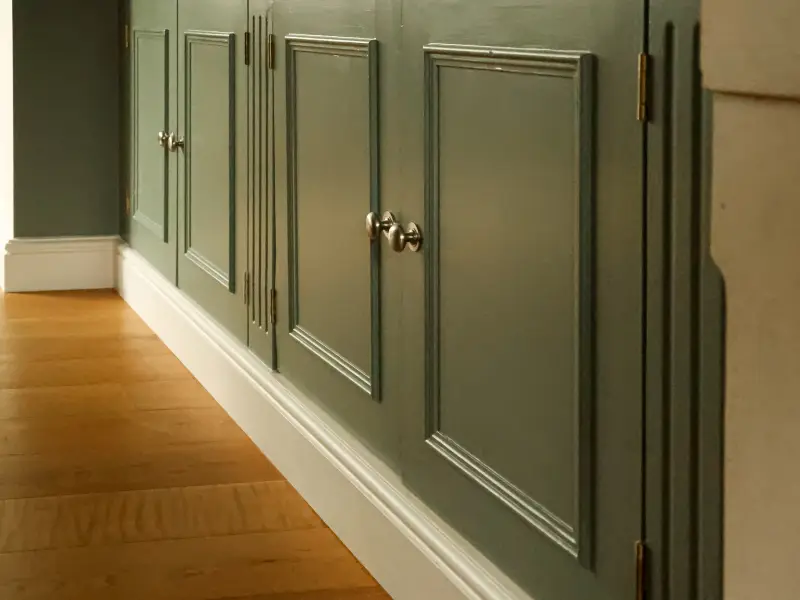
A practical alternative to replacement
Cabinet painting is often the sensible middle ground between living with a tired kitchen and committing to a full replacement project. If the layout still works and the cabinets are structurally sound, repainting can dramatically improve how the room feels without the cost, waste and disruption of starting over. The value comes from treating the work as a detailed refinishing process rather than as ordinary wall painting. When that distinction is respected, the finished cabinets can look cleaner, sharper and far better integrated with the rest of the room.
Assessment before the prep begins
Not every cabinet surface responds the same way, so the first step is understanding what is already there. Grease, previous coatings, handling marks and wear around the edges all affect how the job should proceed. Some cabinets need more cleaning, others need more abrasion, and some may benefit from minor filling before any primer is applied. That early assessment helps set realistic expectations for the finish and avoids shortcuts that would show up quickly once the doors and drawer fronts are back in everyday use.
Preparation is where cabinet jobs are won or lost
Cabinets demand a level of preparation that goes beyond a standard room refresh. Degreasing, deglossing, sanding and suitable priming all play a part because kitchen and utility surfaces are exposed to repeated contact, moisture and cleaning. Skipping those stages may save time at the start but usually shortens the life of the finish and makes wear appear faster around handles, edges and corners. Taking the prep seriously gives the topcoats a better base and helps the finish cure into something that feels intentional rather than fragile.
A more controlled approach to the finishing stage
Because cabinets include multiple faces, profiles and junctions, the finishing stage benefits from a calm, methodical process. Doors and drawer fronts may need to be handled separately, labelled carefully and returned in the right order so the room comes back together cleanly. Coverage should be even, edges should feel controlled and the overall sheen should stay consistent from one unit to the next. Those details are what make a cabinet repaint feel like a proper refresh rather than a quick colour change layered over obvious wear.
Balancing appearance with everyday durability
Cabinets have to look good, but they also have to cope with regular use. The finish needs to withstand touching, cleaning and the normal knocks of a busy kitchen or utility space, so product choice matters just as much as colour choice. A well-specified system helps the repaint feel practical after the visual excitement of the initial transformation has passed. That is especially important for households that want the room to work hard rather than simply photograph well on the day the job is finished.
Helping the whole room feel more considered
A successful cabinet repaint does more than improve the units themselves. It can lighten the room, support a new wall colour, sit more comfortably with the worktops and make built-ins feel better connected to the rest of the interior. Because the change is so visible, the finishing details need to be handled with patience from start to finish. When that care is in place, repainting can be one of the most effective ways to modernise a space without turning it into a full renovation project. It also gives the room a more coherent finish, because the cabinetry no longer feels like a separate, dated layer sitting against newer walls or trim. When the prep, colour selection and curing expectations are handled clearly, the result feels both practical and genuinely upgraded. That balance is what makes cabinet repainting worthwhile for clients who want a cleaner look without taking on the disruption of replacing perfectly usable joinery. In the right setting, it can be one of the most efficient visual upgrades available within an otherwise settled room.
Frequently asked questions
Answers to some of the questions people ask before they book.
Is cabinet painting a good alternative to replacement?
Often, yes. If the cabinets are sound and the layout still works, repainting can be a practical middle ground.
Do cabinets need special prep?
Yes. Cleaning, abrasion and suitable priming are essential if the finish is meant to hold up well.
Can built-ins and utility cabinets be included too?
Yes. The same process can be applied to other painted cabinetry where the surfaces are suitable.
Will the finish need time to cure?
Yes. Cabinets should be treated carefully while the coatings continue to harden after application.